
What Shelby County Property Tax Records Show
The Citizen Access Portal pairs assessment labels with payment labels in one view. Treat each figure as a dated field. None of it replaces a deed, survey, or private appraisal.
| Field | What It Shows | Where |
|---|---|---|
| Land / improvement value | Separate components of the account's value | Citizen Access detail |
| Market / total value | County appraised-value label for the tax year | Citizen Access detail |
| Assessed / taxable value | Value after classification and displayed adjustments | Assessment fields |
| Exemption / class | Displayed relief and statutory property category | Assessment fields |
| Total tax / paid / due | Bill, fees, payment status and remaining amount | Tax account |
Recorded sale consideration is its own transfer fact. Neither the tax bill nor the assessor's market value will automatically match a recent purchase price.
Search Citizen Access by the Right Key
Citizen Access offers several search modes: Property Address, Mailing Address, Owner, Parcel # and Key #. Start with the situs address. Strip punctuation or a unit if the lookup stalls. Save the exact parcel or key number for later. The Mailing Address mode tracks tax correspondence. It can point somewhere other than the physical property. An owner search may miss trusts, initials, or punctuation inside an LLC name.
| Mode | Useful for | Keep with result |
|---|---|---|
| Property Address | Known site | Exact situs label and city/ZIP |
| Owner | Accounts under a name/entity | Roll spelling and tax year |
| Parcel / Key | Repeatable account lookup | Leading zeros, spaces, punctuation |
| Mailing Address | Tax-correspondence destination | Do not confuse it with situs |
The portal runs on JavaScript, so it may not bookmark cleanly. If a result will support an appeal or purchase review, save the URL, the date, the selected mode, and the tax year yourself.
Calculate Alabama Assessment Terms Correctly
Under Alabama Department of Revenue guidance, appraised or market value gets multiplied by a statutory classification ratio. Class II property not otherwise classified uses 20 percent. Class III covers qualifying single-family owner-occupied, agricultural, forest, historic and manufactured-home property. It uses 10 percent. Millage is then applied to assessed value after any adjustments.
Tax-record vocabulary
Market or appraised value is the county's figure before the ratio. Assessed value is what remains after classification. Millage is the levy applied in the calculation. An exemption is qualifying relief on the account, and a tax lien is a claim from unpaid tax, not simply a large bill.
Match the class and exemption to the same tax year as the value. A 10 percent Class III result is not comparable to a 20 percent Class II result. Their assessment formulas differ.
The New 7% Cap in Shelby Tax History
Act 2024-344 and Rule 810-4-1-.28 set October 1, 2024 as the base year. Affected collections begin October 1, 2025. State guidance now caps annual increases in taxable assessed value at 7 percent. The cap applies to Class II and III property. Exceptions apply, including ownership changes, class changes, and new improvements. The cap is not a market appraisal. It also does not promise a bill will rise no more than seven percent. Exemptions and levies can move independently.
When a value history looks odd, compare the records side by side. Look at the tax year, classification, exemption, ownership change and improvement record. Implementation material can be updated. Note the date on the state guidance you rely on. See the official Alabama 7% cap information before applying the rule to a specific account.
Read Shelby Payment History Separately
Payment-history labels include Tax Year, Paid By, Paid Date, Receipt Number, Total Taxes Plus Fees, Account Number, Tax & Cost and Total Paid. They show who submitted a payment and when. "Paid By" does not prove ownership of the parcel. Read Fee Due, Paid and Total Due together. The three tell one story only as a set. For the entry point, use the official county tax portal landing page.
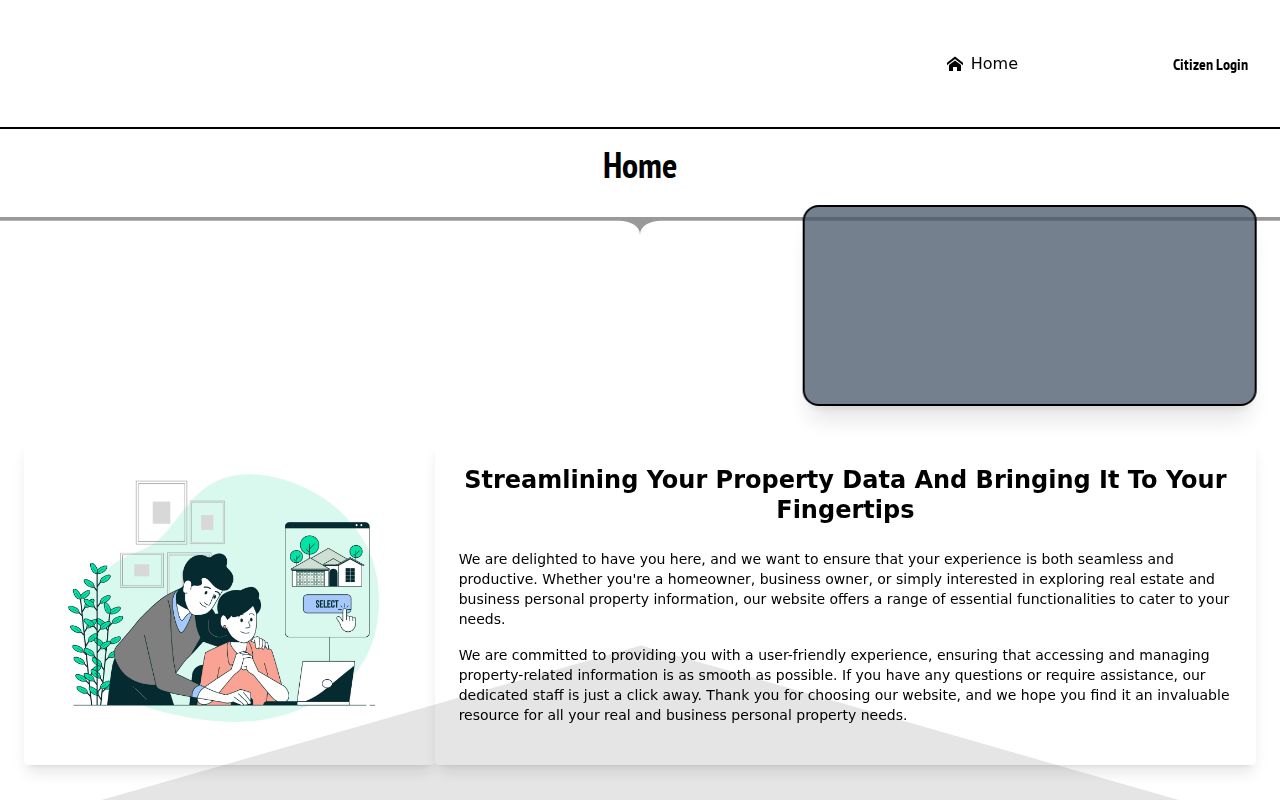
That landing page is only the route. The account detail and its stated tax year supply the operative payment information.
Check Delinquency and the May Sale Trail
Begin with the county's online DelqSearch route for current delinquency. Then confirm with the Property Tax Commissioner. A county planning appendix describes Alabama tax sales in the third or fourth week of May. But that historic document is not the current sale list or calendar. Confirm the present schedule and parcel status directly. The Shelby delinquent-tax search route is the place to begin.
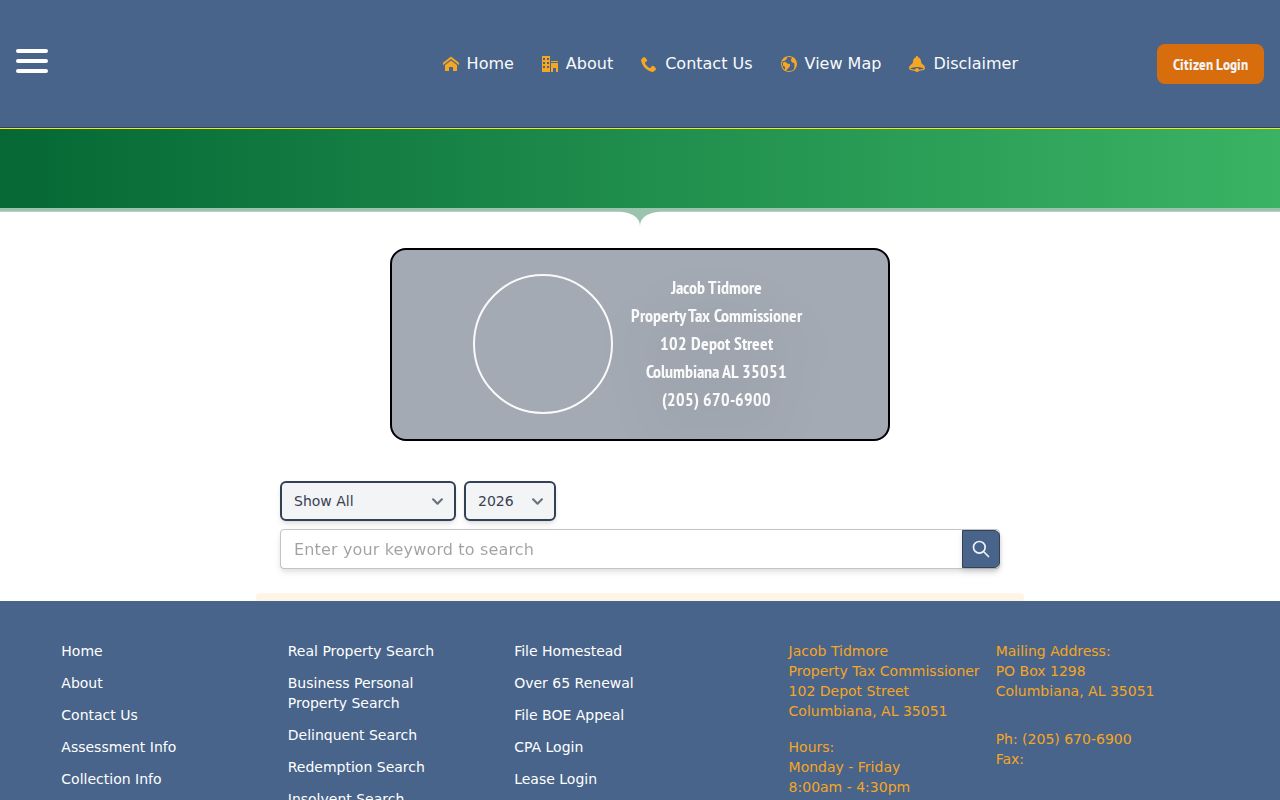
A delinquent account is not a recorded tax deed. Before drawing any chain-of-title conclusion, cross-check ROAM for TAX SALE CERTIFICATES, TAX SALES DEEDS, or redemption instruments.
Look Up a Shelby County Tax Bill
Use the current county account rather than a search-engine summary or an old sale list. Then preserve the parcel, tax year, receipt, and status.
- Search Citizen Access by address, then switch to parcel/key.
- Read current and prior tax years, payment date, receipt, fees and total due.
- Check property class and exemption on the assessment detail.
- Use DelqSearch and confirm any sale status with the county office.
- Assessed value
- Appraised value adjusted by classification.
- Mill rate / levy
- The rate used in the tax calculation.
- Homestead exemption
- Qualifying relief that must be confirmed on the account.
- Tax lien
- A claim associated with unpaid tax.
Appeal a Shelby County Assessment
Alabama guidance provides a 30-day protest period from the valuation notice. Use the Shelby Board of Equalization appeal route and preserve the notice date, parcel, tax year, owner, value challenged and supporting comparable or property-condition evidence. Call the county tax office at 205-670-6900 or write PO Box 1298, Columbiana, AL 35051 when the rendered form fails.
Inspect the official appeal route used for filing guidance.
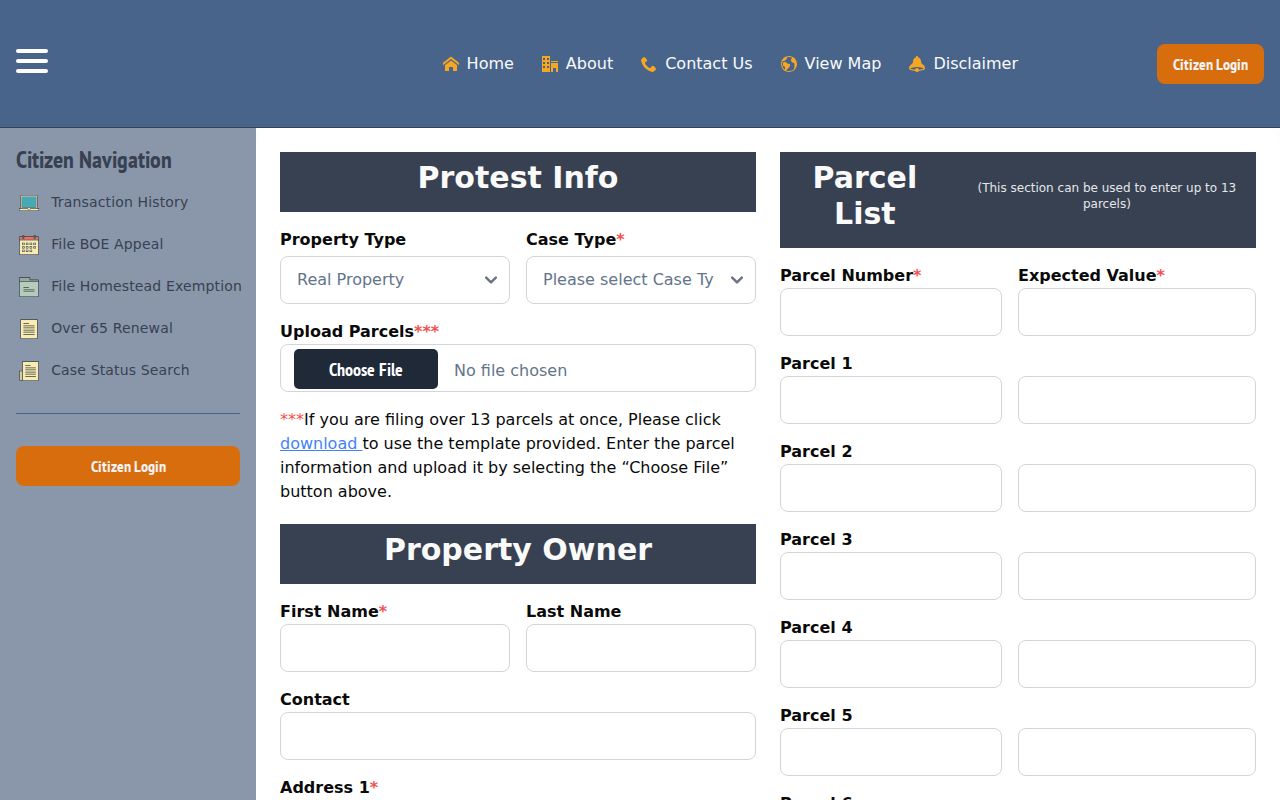
The online route is only an entry point. A filer must still follow the current notice and county instructions for required fields and delivery.
Appeal window. Submit the written protest within 30 days of the valuation notice and retain proof of delivery. Confirm the current Shelby County procedure before the deadline.
Build a Shelby Assessment Evidence File
A protest file works best when everything points to one parcel and one valuation date. Pull the Citizen Access detail first. It should show the parcel and key number. It should also show property class, exemption, land value, and improvement value. Market or total value appears there too, plus assessed or taxable value by tax year. Keep the dated valuation notice too. Add photographs or paperwork describing physical condition on that date. Comparable sales need recording references and honest notes about differences, not undated listing-page estimates.
A recent conveyance helps, but it does not replace a valuation. The Real Estate Validation Form in Shelby County records grantor and grantee names and addresses. It also lists the property address, sale date, and the purchase price or actual value or assessor market value. It lists supporting-evidence categories like an appraisal, sales contract, or closing statement. That form exists for transfer-tax validation. It is no substitute for a deed or a full appraisal. Before claiming one number controls another, weigh the recorded transaction and the tax-year snapshot. Weigh any ownership-change exception under the 7% cap as well.
When Citizen Access will not load, the Property Tax Commissioner can help. Visit 102 Depot Street in Columbiana, call 205-670-6900, mail PO Box 1298, or fax 205-670-6915. State the parcel, the tax year, and the exact assessment or payment field you need. Alabama's public-records statute sets no single statewide deadline or fee schedule. So keep the office response and any estimate on hand.