
Compare Shelby County Property Value Figures
One Shelby County property value question can have four different answers. The Property Tax Commissioner breaks each tax account into land, improvements, market value and assessed value. A recorded deed adds its own figure, the consideration paid in a single transaction. Every number carries its own date. Every one answers a different question, drawn from a different corner of the public record.
| Value type | Meaning in the record | Official source |
|---|---|---|
| Market or appraised value | The county's mass-appraisal estimate before the class ratio is applied | Citizen Access tax account |
| Assessed value | Market value multiplied by Alabama's property-class ratio | Citizen Access tax account |
| Sale or consideration | The amount reported with a conveyance, when the instrument states it | ROAM deed and validation filing |
| Land and improvement values | The appraisal split between the site and buildings or other improvements | Citizen Access tax account |
Alabama sorts taxable property into classes with distinct ratios. Class III is assessed at 10 percent of market value. Class II sits at 20 percent. Class I utility property is assessed at 30 percent. So an assessed figure far below the county's market number is normal arithmetic. It is not an error. A sale price stands apart from both. It reflects one deal, its terms, and its recording date.
Read Shelby County Property Value Components
Start with the Shelby County Citizen Access Portal, the primary source for value figures. Write down the tax year, parcel number, key number and property class. Set the exemption beside every amount you pull. Land value covers the site itself. Improvement value captures the taxable structures and other assessed additions. Watching the two together can explain a shift that a single total would mask.
Picture a newly platted vacant lot. Its improvement value may be zero or close to it. A house or commercial build can follow in a later tax year. That can add a large improvement figure. That sequence is context, not proof. A city permit or plat never sets the county value. Compare the same parcel and class across several years before concluding anything.
Alabama Ratios Behind Shelby County Property Value
The statewide ratio framework comes from the Alabama Department of Revenue assessment guide. Class III generally covers agricultural, forest and owner-occupied single-family residential property at 10 percent. Class II sits at 20 percent. Class I utility property sits at 30 percent. In short, the class on the account matters. It matters as much as the market-value figure itself.
- Market value
- The county's mass-appraisal estimate of full value for the stated tax year.
- Assessment ratio
- The percentage assigned by Alabama law to the property's class.
- Assessed value
- The market figure after the class ratio is applied, before interpreting exemptions and tax calculations.
- Reassessment
- A new review or update of the value carried on the assessment roll.
- Sale consideration
- The transaction amount reported in a deed or related validation record, when present.
The 7 Percent Cap on Shelby County Property Value
Alabama Act 2024-344 and Revenue Rule 810-4-1-.28 add a modern limit to how values can climb. The state guidance sets October 1, 2024 as the base year. Collection begins October 1, 2025. For Class II and III property, taxable assessed value cannot rise more than 7 percent a year. Listed exceptions apply.
Several events can still break a clean year-to-year comparison. A change of ownership, a switch in property class, or new improvements all reset the math. Note those events before calling a larger change inconsistent. And keep the cap in perspective. It limits growth in taxable assessed value. It does not freeze the county's market estimate, and it does not turn the assessed figure into a predicted sale price.
Where a Shelby County Property Value Records Sale Price
When a sale amount matters, look for it in the deed indexed by the Shelby County Probate Court. It may also appear in the Alabama Real Estate Validation filing that travels with a conveyance. The validation form itself asks for sale date, purchase or actual value, market value and supporting evidence. The Shelby County ROAM index is the official route to the recorded instrument.
Not every transfer is an open-market sale. Family transfers, estate deeds, quitclaim instruments, corrective deeds and entity reorganizations can all produce consideration. That can make a poor market comparison. Read the deed type and the parties named. Then check its recording date against the tax year on the assessor account.
See the Shelby County Property Search Screen
The official Citizen Access property search offers several ways in: property address, mailing address, owner, parcel number and key number.
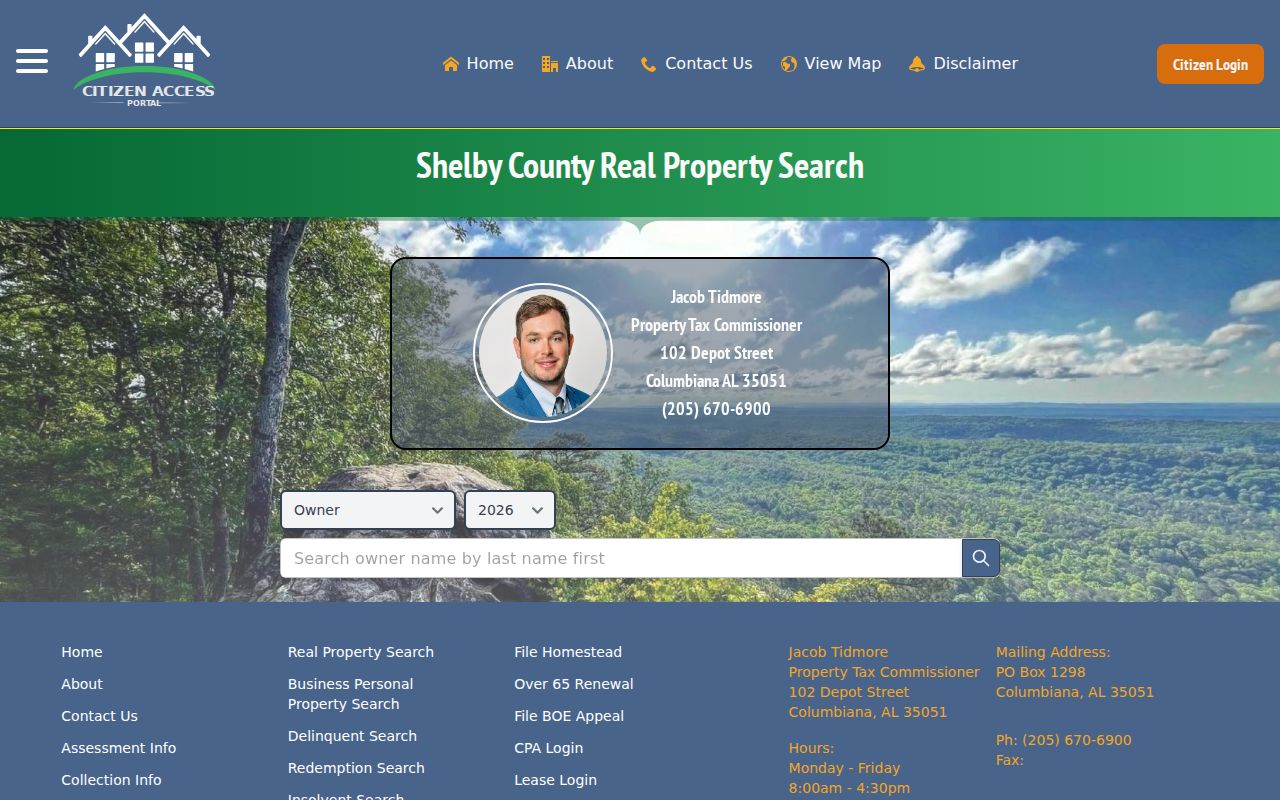
The search screen opens the door. It is not the evidence itself. Open the matching account and record the parcel, tax year, class, exemption, plus the land, improvement, market and assessed fields.
Look Up a Shelby County Property Value
Start with the address you know, but finish with the parcel. Situs and mailing addresses serve different purposes. Either one can differ from the legal description in a deed. The parcel number and key number form the safest bridge. They connect the county's tax, map and recorded-instrument systems.
- Search the street address in Citizen Access; retry by owner, parcel or key number if needed.
- Confirm that the situs, legal-description clue and parcel identify the intended land.
- Copy the tax year, class, exemption, land, improvement, market and assessed values.
- Open ROAM and inspect the latest relevant conveyance for its deed type, date and consideration.
- Compare only like tax years and note any new improvement, ownership or class change.
- Tax year
- The roll year attached to the county figure.
- Property class
- The Alabama category that selects the assessment ratio.
- Owner Name
- The owner-of-record label on that tax account, which may lag a newly recorded deed.
Other Ways to Verify Shelby County Property Values
If the JavaScript portal will not render, call the Property Tax Commissioner and request the account by parcel or key number. The county office remains the custodian of the roll. For a sale figure, search ROAM online, visit the Recording Room, or send a focused copy request with party names, an approximate date, and book/page or instrument details.
The Alabama Public Records Act, Ala. Code §36-12-40, gives citizens the right to inspect and copy public writings, subject to exceptions. A good request names the parcel, tax year, field or instrument you need. The statute sets no single statewide response deadline or fee schedule, so ask the custodian about format, cost and timing.
Online images are convenient. They are not guaranteed complete. ROAM itself warns that a complete title search requires the Recording Room, and some older mortgage cancellations still sit in the deed books. That limitation matters whenever a transaction or encumbrance seems to clash with the property value trail.
Compare Shelby County Assessed Value by Year
Keep the parcel fixed when you compare assessed value across years. Track any change in class, exemption status, or improvements along the way. The assessor, the deed index, and the GIS layers refresh on their own schedules. Note the date you ran each Shelby County property search so the comparison stays honest. Tax-year labels and deed recording dates should stay separate. The assessor does not publish its lag after a recorded sale.
Plat age and subdivision phase explain development context. In fast-built areas that context helps, but it proves nothing about appreciation. Pull assessed figures from an assessor series, and pull recorded consideration from a deed. One nearby sale cannot establish a trend. Even city population growth cannot establish a Shelby County property value trend.
What Shelby County Property Value Cannot Prove
Shelby County's figure is a mass-appraisal record built for property taxation. It proves no boundary, condition, or title status. It cannot predict a contract price either. GIS acreage is never a survey. The assessor's owner of record field does not replace the latest recorded deed. A buyer or seller who wants a current market opinion needs a qualified appraiser. Proper title work matters too.
Value is not price. A Shelby County assessed value serves taxation and is neither a sale prediction nor an independent appraisal.
Exemptions and appeals shape the tax side of the account. They do not change what a market transaction means. For those procedures, see the Shelby County property tax records guide. Keeping the two tracks apart stops confusion. It keeps a taxable figure, an assessed value, and a deed price from being mistaken for one another.